
Dr. Joyce Miller

Dr. Joyce Miller, semi-retired, is a guest paediatrics researcher at AECC University College, Bournemouth, England. She previously worked full-time as Lead Tutor for MSc Musculoskeletal Health of Paediatrics, undergrad paediatrics and evidence based clinical practice at AECC University College. An Associate Professor, she pioneered the busy infant and child practice in the teaching clinic approximately 25 years ago at AECC.  She is a busy researcher and has authored more than 80 articles published in peer reviewed journals and conducted over 180 seminars world-wide.  She was a certified Brazelton neonate examiner, awarded from Cambridge University and a diplomat of the Royal College Paediatrics and Child Health Nutrition Programme and a fellow of the Royal College of Chiropractors and British Chiropractic Association.  Along with Bournemouth University’s midwifery team from the School of Health and Social Care, in 2013 has developed an AECC-BU breastfeeding clinic located on the University Campus. This is an inter-disciplinary clinic where midwives and chiropractors (and students) manage difficult feeding cases together and learn together. She focuses on the care of the neonate and infants, obtaining her PhD in musculoskeletal health of the infant in 2013. She has undergraduate degrees in education and psychology and a post-graduate diplomate in chiropractic orthopaedics. She authored the book, Evidence Based Chiropractic Care for Infants in 2019, co-edits Journal Clinical Chiropractic Pediatrics and continues to mentor graduate students.

View Dr. Miller’s research on researchgate.com.

Here is a link to purchase Dr. Miller’s book, from the publisher and from Amazon.

Evidence Based Chiropractic Care for Infants

Here are the articles we discuss in this episode:

1.
Maternal Report of Outcomes of Chiropractic Care for Infants.
Miller JE, Hanson HA, Hiew M, Lo Tiap Kwong DS, Mok Z, Tee YH.
J Manipulative Physiol Ther. 2019 Mar-Apr;42(3):167-176. doi: 10.1016/j.jmpt.2018.10.005. Epub 2019 Apr 25.
PMID: 31029467
2.
Long-term effects of infant colic: a survey comparison of chiropractic treatment and nontreatment groups.
Miller JE, Phillips HL.
J Manipulative Physiol Ther. 2009 Oct;32(8):635-8. doi: 10.1016/j.jmpt.2009.08.017.
PMID: 19836599
3.
Efficacy of chiropractic manual therapy on infant colic: a pragmatic single-blind, randomized controlled trial.
Miller JE, Newell D, Bolton JE.
J Manipulative Physiol Ther. 2012 Oct;35(8):600-7. doi: 10.1016/j.jmpt.2012.09.010.
PMID: 23158465 Clinical Trial.
4.
Risks and rewards of early musculoskeletal assessment: An evidence-based case report
Joyce Miller, Marcella Fontana, Karin Jernlås, Henny Olofsson, Ida Verwijst.
British Journal of Midwifery VOL. 21, NO. 10. https://doi.org/10.12968/bjom.2013.21.10.736

View another chiropractic pediatric podcast episode.

Dr. Ken Weber

Dr. Ken Weber and I discuss his research pursuits which involve: 1) developing imaging modalities that are more sensitive and specific to the pathology, providing more diagnostic, prognostic, and predictive information; 2) providing more quantitative information to the clinician; and 3) using these measures to better understand the nervous system and how it functions, the neurophysiology of pain, how treatments work, and why certain treatments work for some patients but not for others. Dr. Ken Weber is an Instructor in the Department of Anesthesia, Perioperative and Pain Medicine at Stanford University. He obtained his Doctor of Chiropractic from Palmer College of Chiropractic Florida in 2009 and then completed a PhD in neuroscience at Northwestern University in 2016, specializing in movement and rehabilitation science. Ken’s research intersects clinical pain research and advanced MRI techniques with an emphasis on brain, spinal cord, and musculoskeletal imaging. His research aims to better understand the neural and musculoskeletal changes underlying clinical pain conditions, the mechanisms of treatments, and predictors for recovery. Ken is currently supported by a K23 Mentored Patient-Oriented Research Career Development Award from the National Institute of Neurological Disorders and Stroke of the National Institutes of Health. His previous funding has included the National Center for Complementary and Integrative Health, the National Institute on Drug Abuse, and the NCMIC Foundation, Inc.

I’d also like to point out that Ken was recently selected to be part of the CARL (Chiropractic Academy for Research Leadership) program

View Dr. Weber‘s research at researchgate.net.

Here are some of the papers we discuss in this episode.

1. Machine Learning for the Prediction of Cervical Spondylotic Myelopathy: A Post Hoc Pilot Study of 28 Participants.
  Hopkins BS, Weber KA 2nd, Kesavabhotla K, Paliwal M, Cantrell DR, Smith ZA.
  World Neurosurg. 2019 Jul;127:e436-e442. doi: 10.1016/j.wneu.2019.03.165. Epub 2019 Mar 25.
  PMID: 30922901 [PubMed – indexed for MEDLINE]
  Similar articles
2. Are Magnetic Resonance Imaging Technologies Crucial to Our Understanding of Spinal Conditions?
  Crawford RJ, Fortin M, Weber KA 2nd, Smith A, Elliott JM.
  J Orthop Sports Phys Ther. 2019 May;49(5):320-329. doi: 10.2519/jospt.2019.8793. Epub 2019 Mar 26.
  PMID: 30913967 [PubMed – in process]
  Similar articles
3. Lateral Corticospinal Tract Damage Correlates With Motor Output in Incomplete Spinal Cord Injury.
  Smith AC, Weber KA 2nd, O’Dell DR, Parrish TB, Wasielewski M, Elliott JM.
  Arch Phys Med Rehabil. 2018 Apr;99(4):660-666. doi: 10.1016/j.apmr.2017.10.002. Epub 2017 Oct 26.
  PMID: 29107041 [PubMed – indexed for MEDLINE] Free PMC Article
  Similar articles
4. Evidence for decreased Neurologic Pain Signature activation following thoracic spinal manipulation in healthy volunteers and participants with neck pain.
  Weber Ii KA, Wager TD, Mackey S, Elliott JM, Liu WC, Sparks CL.
  Neuroimage Clin. 2019;24:102042. doi: 10.1016/j.nicl.2019.102042. Epub 2019 Oct 18.
  PMID: 31670070 [PubMed – in process] Free PMC Article
  Similar articles
5. Deep Learning Convolutional Neural Networks for the Automatic Quantification of Muscle Fat Infiltration Following Whiplash Injury.
  Weber KA, Smith AC, Wasielewski M, Eghtesad K, Upadhyayula PA, Wintermark M, Hastie TJ, Parrish TB, Mackey S, Elliott JM.
  Sci Rep. 2019 May 28;9(1):7973. doi: 10.1038/s41598-019-44416-8.
  PMID: 31138878 [PubMed – in process] Free PMC Article
  Similar articles

Dr. William Reed is an Associate Professor in the School of Health Professions, Department of Physical Therapy at University of Alabama at Birmingham. He is the director of the Mechanisms of Spinal Manual Therapy Laboratory. His research is directed towards determining the peripheral and central mechanisms of spinal manipulation (manual therapy) for the treatment of musculoskeletal pain.  He is also the Interim Co-Director of the PhD program in Rehabilitation Science at the University of Alabama at Birmingham. Here we discuss some of Dr. William Reed’s research starting with his introduction to research as a chiropractic student in 1994 then we’ll discuss his work with Dr. Joel Pickar, his K01 award topic, and progressing to his latest line of research on characterization of a rat LBP model and spinal mobilization mechanisms. 

See more of Dr. Reed’s research at researchgate.net.

The articles we discuss in this episode include:

1.
Chiropractic management of primary nocturnal enuresis.
Reed WR, Beavers S, Reddy SK, Kern G.
J Manipulative Physiol Ther. 1994 Nov-Dec;17(9):596-600.
PMID: 7884329 Clinical Trial.
2.
Relationship between Biomechanical Characteristics of Spinal Manipulation and Neural Responses in an Animal Model: Effect of Linear Control of Thrust Displacement versus Force, Thrust Amplitude, Thrust Duration, and Thrust Rate.
Reed WR, Cao DY, Long CR, Kawchuk GN, Pickar JG.
Evid Based Complement Alternat Med. 2013;2013:492039. doi: 10.1155/2013/492039. Epub 2013 Jan 20.
PMID: 23401713 Free PMC article.
3.
Paraspinal Muscle Spindle Response to Intervertebral Fixation and Segmental Thrust Level During Spinal Manipulation in an Animal Model.
Reed WR, Pickar JG.
Spine (Phila Pa 1976). 2015 Jul 1;40(13):E752-9. doi: 10.1097/BRS.0000000000000915.
PMID: 25856263 Free PMC article.
4.
Neural responses to the mechanical characteristics of high velocity, low amplitude spinal manipulation: Effect of specific contact site.
Reed WR, Long CR, Kawchuk GN, Pickar JG.
Man Ther. 2015 Dec;20(6):797-804. doi: 10.1016/j.math.2015.03.008. Epub 2015 Mar 27.
PMID: 25841562 Free PMC article.
5.
Spinal Mobilization Prevents NGF-Induced Trunk Mechanical Hyperalgesia and Attenuates Expression of CGRP.
Reed WR, Little JW, Lima CR, Sorge RE, Yarar-Fisher C, Eraslan M, Hurt CP, Ness TJ, Gu JG, Martins DF, Li P.
Front Neurosci. 2020 Apr 30;14:385. doi: 10.3389/fnins.2020.00385. eCollection 2020.
PMID: 32425750 Free PMC article.


Check out related chiropractic science podcasts on neurophysiology and the brain.

Tue Secher Jensen

Tue Secher Jensen graduated from the University of Southern Denmark in 2002 and has been working as a researcher since his student years. After graduation, he worked as a chiropractic intern and as a chiropractor for a couple of years alongside his work as a research assistant. In 2009, he defended his PhD thesis on the prevalence, development and clinical value of Modic changes in the general population. From 2013 to 2016, he was employed as a senior researcher and clinical associate professor at the Spine Centre of Southern Denmark and since 2013 he has also been employed as a senior researcher at the Nordic Institute of Chiropractic and Clinical Biomechanics (NIKKB). Since 2017, Tue Secher Jensen has been employed at the Diagnostic Centre – Imaging Sector at the Regional Hospital in Silkeborg, Denmark, as a chiropractor doing research and reading spinal MRI. From 2018 to 2019 he was an associate professor at the Department of Clinical Medicine at Aarhus University. Tue Secher Jensen was recently (January 1st 2020) appointed, along with Lise Hestbaek (who has previously been on the podcast), as professors at the Department of Sports Science and Clinical Biomechanics at SDU.

Tue’s research has primarily focused on the clinical value of MRI findings in people with back pain. In recent years his research focus has shifted more towards clinical guidelines, knowledge translation and implementation.

See more of Tue’s research at researchgate.net.

The articles we discuss in this episode include:

1. Systematic literature review of imaging features of spinal degeneration in asymptomatic populations.
  Brinjikji W, Luetmer PH, Comstock B, Bresnahan BW, Chen LE, Deyo RA, Halabi S, Turner JA, Avins AL, James K, Wald JT, Kallmes DF, Jarvik JG.
  AJNR Am J Neuroradiol. 2015 Apr;36(4):811-6. doi: 10.3174/ajnr.A4173. Epub 2014 Nov 27. Review.
  PMID: 25430861 [PubMed – indexed for MEDLINE] Free PMC Article
  Similar articles
2. MRI Findings of Disc Degeneration are More Prevalent in Adults with Low Back Pain than in Asymptomatic Controls: A Systematic Review and Meta-Analysis.
  Brinjikji W, Diehn FE, Jarvik JG, Carr CM, Kallmes DF, Murad MH, Luetmer PH.
  AJNR Am J Neuroradiol. 2015 Dec;36(12):2394-9. doi: 10.3174/ajnr.A4498. Epub 2015 Sep 10. Review.
  PMID: 26359154 [PubMed – indexed for MEDLINE] Free Article
  Similar articles
3. Magnetic resonance imaging findings as predictors of clinical outcome in patients with sciatica receiving active conservative treatment.
  Jensen TS, Albert HB, Sorensen JS, Manniche C, Leboeuf-Yde C.
  J Manipulative Physiol Ther. 2007 Feb;30(2):98-108.
  PMID: 17320730 [PubMed – indexed for MEDLINE]
  Similar articles
4. Natural course of disc morphology in patients with sciatica: an MRI study using a standardized qualitative classification system.
  Jensen TS, Albert HB, Soerensen JS, Manniche C, Leboeuf-Yde C.
  Spine (Phila Pa 1976). 2006 Jun 15;31(14):1605-12; discussion 1613.
  PMID: 16778696 [PubMed – indexed for MEDLINE]
  Similar articles
5. Modic changes, possible causes and relation to low back pain.
  Albert HB, Kjaer P, Jensen TS, Sorensen JS, Bendix T, Manniche C.
  Med Hypotheses. 2008;70(2):361-8. Epub 2007 Jul 10.
  PMID: 17624684 [PubMed – indexed for MEDLINE]
  Similar articles
6. Vertebral endplate signal changes (Modic change): a systematic literature review of prevalence and association with non-specific low back pain.
  Jensen TS, Karppinen J, Sorensen JS, Niinimäki J, Leboeuf-Yde C.
  Eur Spine J. 2008 Nov;17(11):1407-22. doi: 10.1007/s00586-008-0770-2. Epub 2008 Sep 12. Review.
  PMID: 18787845 [PubMed – indexed for MEDLINE] Free PMC Article
  Similar articles
7. Modic changes-Their associations with low back pain and activity limitation: A systematic literature review and meta-analysis.
  Herlin C, Kjaer P, Espeland A, Skouen JS, Leboeuf-Yde C, Karppinen J, Niinimäki J, Sørensen JS, Storheim K, Jensen TS.
  PLoS One. 2018 Aug 1;13(8):e0200677. doi: 10.1371/journal.pone.0200677. eCollection 2018.
  PMID: 30067777 [PubMed – indexed for MEDLINE] Free PMC Article
  Similar articles
8. Antibiotic treatment in patients with chronic low back pain and vertebral bone edema (Modic type 1 changes): a double-blind randomized clinical controlled trial of efficacy.
  Albert HB, Sorensen JS, Christensen BS, Manniche C.
  Eur Spine J. 2013 Apr;22(4):697-707. doi: 10.1007/s00586-013-2675-y. Epub 2013 Feb 13.
  PMID: 23404353 [PubMed – indexed for MEDLINE] Free PMC Article
  Similar articles
Dr. Kevin Haussler, DVM, DC, PhD

Kevin Haussler, DVM, DC, PhD and I discuss his research regarding chiropractic and horses.  In particular we discuss four themes in this interview: 1) How chiropractic techniques can be applied to horses; 2) How do you know you are making a difference (objective outcome measures)?; 3) Effects of mobilization versus manipulation in horses; 4)Controlled clinical trials in horses with acute versus chronic back pain.

Dr. Haussler graduated from The Ohio State University, College of Veterinary Medicine in 1988 and completed a small animal internship in Sacramento, CA.  To further his training in the conservative management of spinal-related disorders, he pursued human training at Palmer College of Chiropractic-West and completed a veterinary chiropractic certification program in 1993.  He attended the University of California-Davis to attain a PhD focusing on spinal pathology and pelvic biomechanics in Thoroughbred racehorses.  Post-doctorate training involved evaluation of in-vivo spinal kinematics in horses at Cornell University.  While at Cornell, he directed the newly formed Integrative Medicine Service which provided chiropractic, acupuncture and physical therapy services to both small and large animals.  Currently, he is an Associate Professor at the Orthopaedic Research Center at Colorado State University and is involved in teaching, clinical duties, and research into the objective assessment of musculoskeletal pain, spinal dysfunction and the application of physical therapy and rehabilitation. Dr. Haussler is a charter diplomate of the American College of Veterinary Sports Medicine and Rehabilitation and is currently a course instructor for the Equine Rehabilitation Certification course co-branded by the University of Tennessee and Colorado State University.

View Dr. Haussler’s research at researchgate.net

Below are the articles we discuss in this interview.

1. Haussler KK. Review of Manual Therapy Techniques in Equine Practice. Journal of Equine Veterinary Science. 2009;29(12):849-69.
2. Haussler KK, Erb HN. Pressure algometry for the detection of induced back pain in horses: a preliminary study. Equine Vet J. 2006;38(1):76-81.
3. Haussler KK, Hill AE, Puttlitz CM, McIlwraith CW. Effects of vertebral mobilization and manipulation on kinematics of the thoracolumbar region. Am J Vet Res. 2007;68(5):508-16.
4. Haussler KK, Manchon PT, Donnell JR, Frisbie DD. Effects of Low-Level Laser Therapy and Chiropractic Care on Back Pain in Quarter Horses. Journal of Equine Veterinary Science. 2020;86:102891.
5. Sullivan KA, Hill AE, Haussler KK. The effects of chiropractic, massage and phenylbutazone on spinal mechanical nociceptive thresholds in horses without clinical signs. Equine Vet J. 2008;40(1):14-20.

To see other chiropractic research on mobilization and manipulation here.

Drs. Imran Niazi and Kelly Holt

Drs. Imran Niazi and Kelly Holt discuss with me their research on chiropractic, falls risk, and neuroplasticity in various populations. Imran Khan Niazi received his B.Sc. degree in Electrical engineering (specialisation: Biomedical Engineering) from the Riphah International University, Islamabad, Pakistan, in 2005, and his  Masters in biomedical engineering from University & FH Luebeck, Luebeck, Germany in 2009. Later he got his PhD under the supervision of Prof. Dario Farina from Center of sensory-motor interaction, Health Science Technology Department, University of Aalborg, Aalborg, Denmark in 2012. After working as a postdoc for a year, he moved to New Zealand in 2013, where he is currently working as Senior Research Fellow at New Zealand College of Chiropractic. He has an adjunct position in Aalborg University, Denmark and Auckland University of Technology, New Zealand.

Dr. Niazi is interested in studying and understanding the altered mechanism of motor control and learning in neurological disorder to develop various technologies that can enhance the QOL of these patients. He has successfully co-supervised 4 PhD and 31 master thesis and currently has 4 active PhD students. He has authored 46 peer-reviewed journal papers and 82 conference papers (proceedings and extended abstracts including). His work has been cited more than 1100 times, and have an h-index of 16 according to google scholar. Over the last ten year, he has received funding worth around US $ 1.5 million from various sources. He is currently working as a review editor for Frontiers in Robotics and AI (Biomedical Robotics) and reviewer for more than 25 engineering/neuroscience journals.

Dr. Kelly Holt was a member of the 1998 inaugural graduating class of the New Zealand College of Chiropractic. Besides his chiropractic degree he also holds a Bachelor of Science majoring in physiology and a PhD in Health Science from the University of Auckland. His PhD focused on the effects of chiropractic care on sensorimotor function and falls risk in older adults. He has published work in a number of peer reviewed journals that investigated the effects of chiropractic care on nervous system function and the reliability of vertebral subluxation indicators and has won a number of international research awards. Kelly worked in private practice as a chiropractor for 10 years following graduation and has taught at the New Zealand College of Chiropractic since 2000 and is currently the Dean of Research at the College.   Kelly was named ‘Chiropractor of the Year’ by the New Zealand College of Chiropractic Alumni Association in 2012 and by the New Zealand Chiropractors’ Association in 2014.

View Dr. Imran Niazi’s research at researchgate.net and Dr. Kelly Holt’s research at researchgate.net.

In addition to Drs. Imran Niazi and Kelly Holt, you might also be interested in listening to the previous episode with Dr. Heidi Haavik, also from New Zealand College of Chiropractic discussing “brain adjustments”.

Below are the studies that we discuss in this interview.

1. The effects of a single session of chiropractic care on strength, cortical drive, and spinal excitability in stroke patients.
  Holt K, Niazi IK, Nedergaard RW, Duehr J, Amjad I, Shafique M, Anwar MN, Ndetan H, Turker KS, Haavik H.
  Sci Rep. 2019 Feb 25;9(1):2673. doi: 10.1038/s41598-019-39577-5.
  PMID: 30804399 [PubMed – in process] Free PMC Article
  Similar articles
2. The effects of a single session of spinal manipulation on strength and cortical drive in athletes.
  Christiansen TL, Niazi IK, Holt K, Nedergaard RW, Duehr J, Allen K, Marshall P, Türker KS, Hartvigsen J, Haavik H.
  Eur J Appl Physiol. 2018 Apr;118(4):737-749. doi: 10.1007/s00421-018-3799-x. Epub 2018 Jan 11.
  PMID: 29327170 [PubMed – indexed for MEDLINE] Free PMC Article
  Similar articles
3. Effectiveness of Chiropractic Care to Improve Sensorimotor Function Associated With Falls Risk in Older People: A Randomized Controlled Trial.
  Holt KR, Haavik H, Lee AC, Murphy B, Elley CR.
  J Manipulative Physiol Ther. 2016 May;39(4):267-78. doi: 10.1016/j.jmpt.2016.02.003. Epub 2016 Apr 2.
  PMID: 27050038 [PubMed – indexed for MEDLINE]
  Similar articles
4. Changes in H-reflex and V-waves following spinal manipulation.
  Niazi IK, Türker KS, Flavel S, Kinget M, Duehr J, Haavik H.
  Exp Brain Res. 2015 Apr;233(4):1165-73. doi: 10.1007/s00221-014-4193-5. Epub 2015 Jan 13.
  PMID: 25579661 [PubMed – indexed for MEDLINE]
  Similar articles
Drs. Cindy Peterson and Kim Humphreys

Drs. Cindy Peterson and Kim Humphreys join me to talk about cervical and lumbar disc herniation comparative effectiveness studies involving spinal manipulation compared to nerve root injections. We also discuss spinal manipulation for neck pain with and without dizziness as well as for chronic low back pain.

Cynthia Peterson, RN, DC, DACBR, M.Med.Ed. has worked as a chiropractic radiologist, researcher and educator in 4 countries.  She retired from her positions as Professor and researcher, Radiology Department, Orthopaedic University hospital Balgrist and Professor, Chiropractic Medicine Programme, University of Zürich in 2017. Dr. Peterson has published numerous research studies in many journals including ‘Spine’, European Spine Journal, ‘American Journal of Roentgenology’, ‘JMPT’ and ‘Skeletal Radiology’.  She is currently a Visiting Professor for the Chiropractic Department in the Faculty of Health at the University of Johannesburg, South Africa and is the Quality Assurance Consultant for the European Council on Chiropractic Education.

Barry Kim Humphreys, BSc, DC, PhD, is Professor Emeritus, Faculty of Medicine, University of Zurich. He retired in July 2017, after 9 years as the first Professor for Chiropractic Medicine in Switzerland. During this time, Professor Humphreys was responsible for the development and accreditations of the chiropractic education program, research portfolio and teaching clinic within the university, medical faculty and teaching hospital. Professor Humphreys is a graduate of the University of British Columbia (BSc), Canadian Memorial Chiropractic College (DC), and the University of Southampton, UK (PhD). He has been Academic Dean, Anglo-European College of Chiropractic, Dean of Graduate Education and Research, CMCC and Professor, Chiropractic Medicine, University of Zurich. He has been active in research including chiropractic clinical outcome studies for back and neck pain, functional MRI studies of chronic pain patients and back pain in various gravitational environments (parabolic flight).

Please view Drs. Cindy Peterson and Kim Humphreys research at researchgate.net (Peterson) as well as at researchgate.net (Humphreys).

View all of the podcast episodes at chiropracticscience.com

Here are the articles we discuss in this episode:

1. Symptomatic, Magnetic Resonance Imaging-Confirmed Cervical Disk Herniation Patients: A Comparative-Effectiveness Prospective Observational Study of 2 Age- and Sex-Matched Cohorts Treated With Either Imaging-Guided Indirect Cervical Nerve Root Injections or Spinal Manipulative Therapy.
  Peterson CK, Pfirrmann CW, Hodler J, Leemann S, Schmid C, Anklin B, Humphreys BK.
  J Manipulative Physiol Ther. 2016 Mar-Apr;39(3):210-7. doi: 10.1016/j.jmpt.2016.02.004. Epub 2016 Mar 31.
  PMID: 27040033 [PubMed – indexed for MEDLINE]
  Similar articles
2. Symptomatic magnetic resonance imaging-confirmed lumbar disk herniation patients: a comparative effectiveness prospective observational study of 2 age- and sex-matched cohorts treated with either high-velocity, low-amplitude spinal manipulative therapy or imaging-guided lumbar nerve root injections.
  Peterson CK, Leemann S, Lechmann M, Pfirrmann CW, Hodler J, Humphreys BK.
  J Manipulative Physiol Ther. 2013 May;36(4):218-25. doi: 10.1016/j.jmpt.2013.04.005. Epub 2013 May 22.
  PMID: 23706678 [PubMed – indexed for MEDLINE]
  Similar articles
3. Comparison of outcomes in neck pain patients with and without dizziness undergoing chiropractic treatment: a prospective cohort study with 6 month follow-up.
  Humphreys BK, Peterson C.
  Chiropr Man Therap. 2013 Jan 7;21(1):3. doi: 10.1186/2045-709X-21-3.
  PMID: 23295018 [PubMed] Free PMC Article
  Similar articles
4. An observational study on trajectories and outcomes of chronic low back pain patients referred from a spine surgery division for chiropractic treatment.
  Wirth B, Riner F, Peterson C, Humphreys BK, Farshad M, Becker S, Schweinhardt P.
  Chiropr Man Therap. 2019 Feb 5;27:6. doi: 10.1186/s12998-018-0225-8. eCollection 2019.
  PMID: 30766664 [PubMed – indexed for MEDLINE] Free PMC Article
  Similar articles

In this episode, Dr. Jeff Hebert discusses back pain in young people, the link between back pain, health behavior and cardiovascular disease & sport participation as a health intervention. Jeff Hebert, DC, PhD is a Professor and the CCRF/NBHRF Chair of Musculoskeletal Health Research at the University of New Brunswick, as well as an Adjunct Professor at Murdoch University in Australia. Jeff’s career to date includes 18 years of experience in faculty, clinical, and administrative positions in Canada, the United States, and Australia.  Most recently, he was the Associate Dean (Research) in Murdoch University’s School of Psychology and Exercise Science. Previous appointments include positions as a Senior Lecturer of Rehabilitation Science (Murdoch University) and Assistant Professor of Neurosurgery (University of Utah). He has earned a Bachelor’s degree in Psychology (University of Denver) as well as a Doctorate in Chiropractic (Palmer College) and PhD in Exercise Science (University of Utah). He serves as an Associate Editor for the journal Chiropractic & Manual Therapies. Before pursuing an academic career, Jeff worked as an outpatient and hospital-based clinician in multidisciplinary environments including as pain medicine, sports medicine, and spine surgery.

View Dr. Hebert’s research publications at researchgate.net.

Here are the articles that we discussed in this episode of the chiropractic science podcast.

1. Pubertal development and growth are prospectively associated with spinal pain in young people (CHAMPS study-DK).
  Hebert JJ, Leboeuf-Yde C, Franz C, Lardon A, Hestbæk L, Manson N, Wedderkopp N.
  Eur Spine J. 2019 Feb 11. doi: 10.1007/s00586-019-05905-6. [Epub ahead of print]
  PMID: 30740638 [PubMed – as supplied by publisher]
  Similar articles
2. The relationship of lumbar multifidus muscle morphology to previous, current, and future low back pain: a 9-year population-based prospective cohort study.
  Hebert JJ, Kjaer P, Fritz JM, Walker BF.
  Spine (Phila Pa 1976). 2014 Aug 1;39(17):1417-25. doi: 10.1097/BRS.0000000000000424.
  PMID: 24859576 [PubMed – indexed for MEDLINE]
  Similar articles
3. Physical activity is prospectively associated with spinal pain in children (CHAMPS Study-DK).
  Franz C, Møller NC, Korsholm L, Jespersen E, Hebert JJ, Wedderkopp N.
  Sci Rep. 2017 Sep 14;7(1):11598. doi: 10.1038/s41598-017-11762-4.
  PMID: 28912463 [PubMed – in process] Free PMC Article
  Similar articles
4. The Prospective Association of Organized Sports Participation With Cardiovascular Disease Risk in Children (the CHAMPS Study-DK).
  Hebert JJ, Klakk H, Møller NC, Grøntved A, Andersen LB, Wedderkopp N.
  Mayo Clin Proc. 2017 Jan;92(1):57-65. doi: 10.1016/j.mayocp.2016.08.013. Epub 2016 Nov 16.
  PMID: 27865444 [PubMed – indexed for MEDLINE]
  Similar articles

Martha Funabashi, is a PhD currently working as a clinical research scientist at CMCC. She is also a CARL fellow and the co-lead study coordinator of SafetyNET – an international and multidisciplinary research team to support patient safety among spinal manipulative therapy (SMT) providers. Martha has a Bachelor’s Degree in Physiotherapy and a Master’s Degree in Neuroscience from the University of Sao Paulo – Brazil. She completed her PhD in Rehabilitation Sciences at the University of Alberta under the supervision of Dr. Greg Kawchuk and her post-doctoral fellowship also at the University of Alberta with Dr. Sunita Vohra. Martha’s research interests and passion are on the SMT’s biomechanics, underlying mechanisms, force-time characterization and its safety aspects. Martha has 26 peer-reviewed scientific journal publications, over 40 conference presentations and is on the editorial boards for peer review journals, such as Chiropractic and Manual Therapies. Martha has won research prizes, including the New Investigator Award at the World Federation of Chiropractic Conference 2017 and works in collaboration with emerging and well-known researchers around the world.

Dr. Funabashi’s email is: MFunabashi@cmcc.ca

See Dr. Funabashi’s publications at researchgate.net.

Here is a list of the articles Dr. Funabashi and I discussed on the podcast.

1. SafetyNET Community-based patient safety initiatives: development and application of a Patient Safety and Quality Improvement Survey.
  Funabashi M, Pohlman KA, Mior S, O’Beirne M, Westaway M, De Carvalho D, El-Bayoumi M, Haig B, Wade DJ, Thiel HW, Cassidy JD, Hurwitz E, Kawchuk GN, Vohra S.
  J Can Chiropr Assoc. 2018 Dec;62(3):130-142.
  PMID: 30662067 [PubMed] Free PMC Article
  Similar articles
2. Tissue loading created during spinal manipulation in comparison to loading created by passive spinal movements.
  Funabashi M, Kawchuk GN, Vette AH, Goldsmith P, Prasad N.
  Sci Rep. 2016 Dec 1;6:38107. doi: 10.1038/srep38107.
  PMID: 27905508 [PubMed – indexed for MEDLINE] Free PMC Article
  Similar articles
3. Does the application site of spinal manipulative therapy alter spinal tissues loading?
  Funabashi M, Nougarou F, Descarreaux M, Prasad N, Kawchuk GN.
  Spine J. 2018 Jun;18(6):1041-1052. doi: 10.1016/j.spinee.2018.01.008. Epub 2018 Jan 31.
  PMID: 29355792 [PubMed – indexed for MEDLINE]
  Similar articles

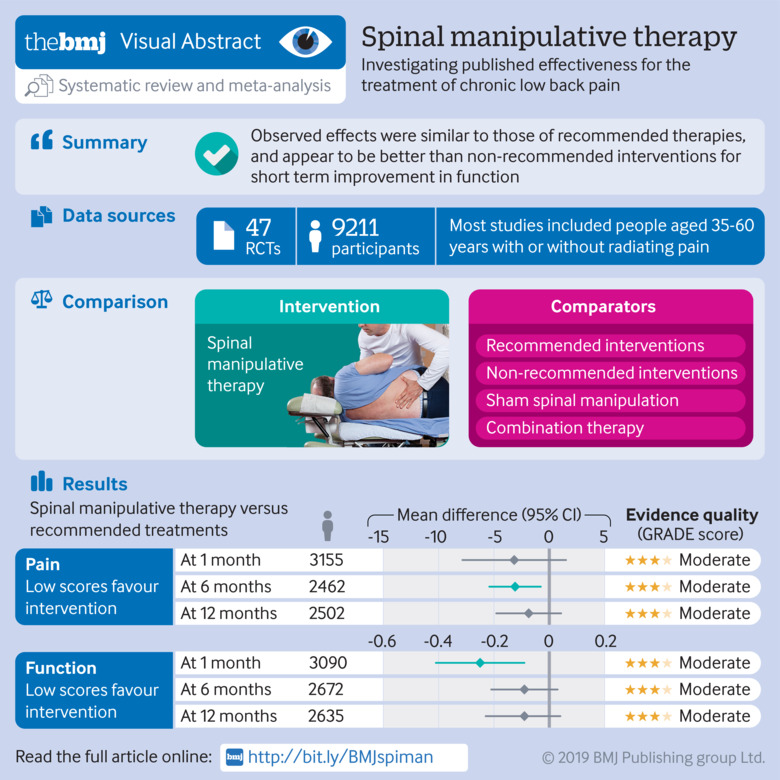
Dr. Rubinstein and I discuss his latest paper that will appear soon in the British Medical Journal regarding his systematic review of spinal manipulative therapy and chronic low back pain. Sidney Rubinstein is an associate professor at the VU University, Amsterdam and adjunct research professor at Southern California University of Health Sciences (SCUHS). He is also a registered epidemiologist in the Netherlands. He has more than 60 publications in international peer-reviewed journals, including three systematic reviews in the Cochrane Library.

His research focuses on effectiveness and cost-effectiveness of interventions in musculoskeletal disorders. His broader goals are to lessen the burden of neck and low-back pain to society by providing high-quality scientific evidence. The projects that he currently supervises are strongly embedded in clinical practice, including the PTED trial, Warrior Trial, an IPD (individual patient data) meta-analysis on spinal manipulative therapy for chronic low-back pain and a large, international observational study in chiropractic care in the elderly (BACE-C cohort study).

One of his passions lies in systematic reviews and meta-analysis as these types of overviews represent a crucial link in the practice of evidence-based health care. He is actively involved in conducting and supervising these reviews, including a position on the Associate Editorial Board of the Cochrane Back and Neck Review Group.  His reviews are quite diverse. One of the more recent Cochrane reviews focused on complications of trocar types for laparoscopic surgery, while another has examined the effectiveness of exercise for acute low back pain. An update of the Cochrane review on the effect of spinal manipulative therapy for chronic low-back has been accepted by the BMJ and should be published soon.

Dr. Rubinstein currently supervises 5 PhD students as well as MSc students, and teaches methodology of systematic reviews and meta-analyses at various levels, including BSc, MSc and PhD students. One chiropractor has received his PhD under Sidney’s supervision, while others are completing theirs.

Here is a link to Dr. Rubinstein’s research at researchgate.net.

Here is a link to Dr. Rubinstein’s page at Vrije Universiteit Amsterdam

The article we discuss in this episode is available now at https://www.bmj.com/content/364/bmj.l689

Benefits and harms of spinal manipulative therapy for the treatment of chronic low back pain: systematic review and meta-analysis of randomised controlled trials

BMJ 2019; 364 doi: https://doi.org/10.1136/bmj.l689 (Published 13 March 2019) Cite this as: BMJ 2019;364:l689