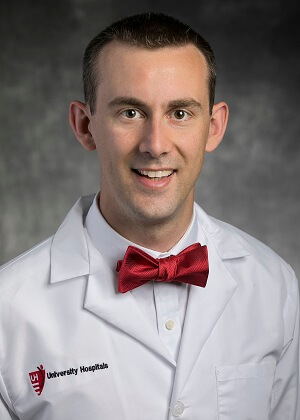
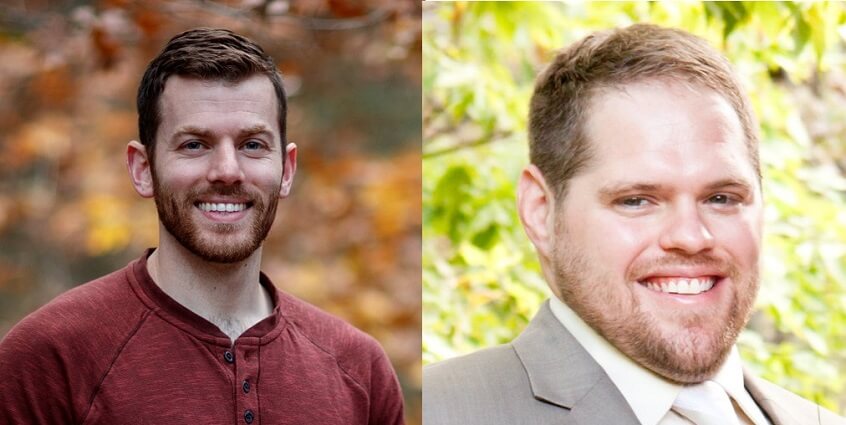
Dr. Robert Trager is a chiropractic physician and researcher at University Hospitals, in Cleveland, Ohio, in the United States. In this episode, we discuss his research covering a variety of clinically focused topics at the intersection of medicine and chiropractic, ranging from case reports to health service utilization. Dr. Trager first became interested in research when he was an undergraduate student at Northeastern University, where took part in a co-op program that got him hands-on experience in a research laboratory. He then attended Logan University, graduating in 2013, and has since practiced in an integrative healthcare setting.
Here are the articles we discuss in this episode. We also talked about the article that Dr. Brian Anderson and I discussed on episode 61 of the podcast.
https://chiropracticscience.com/wp-content/uploads/2023/01/Dr.Trager.jpg420300Dean Smith, DC, PhDhttps://chiropracticscience.com/wp-content/uploads/2017/01/chiroscience-logo-website-title-300x167.jpgDean Smith, DC, PhD2023-01-09 11:01:322023-01-09 11:01:33063- Dr. Robert Trager Discusses Spinal Manipulation, Lumbar Discectomy and Case Reports
Dr. Lindsay Gorrell and I discuss her research regarding spinal manipulation, the vertebral artery and reporting of adverse events. Lindsay Gorrell completed her clinical training in Chiropractic and a Master of Research (The effect of manual and instrument applied cervical spine manipulation on mechanical neck pain) at Macquarie University, Australia. She then completed a PhD (Musculoskeletal Biomechanical and Electromyographical Responses Associated with Spinal Manipulation) under the supervision of Drs Walter Herzog and Jay Triano at The University of Calgary, Canada. She is now working as an International Research Fellow at the Balgrist University Hospital, University of Zurich, Switzerland. Lindsay is also studying a Master of Science in Medical Education at The University of Oxford, England.
Lindsay’s research interests are centered on investigating: i) the delivery of spinal manipulation; ii) the physiological responses and clinical outcomes occurring in response to spinal manipulation; and iii) the safety of the manual therapy. This requires different experimental approaches depending on the research question of interest. Most recently, she has published on the relationship between the amount of strain experienced by the vertebral artery, the 3D movements of the head and neck and the forces applied by clinicians during cervical spine manipulation and physiological responses to cervical and upper thoracic spinal manipulation. Lindsay has maintained part-time clinical practice since graduation.
Dr. Brian Anderson and I discuss the article, Where to start? A two stage residual inclusion approach to estimating influence of the initial provider on health care utilization and costs for low back pain in the US (2022). We question the relationship between chiropractic and emergency department – ED visits in this paper. Does it makes sense that those who first saw a chiropractor had the lowest out of pocket and overall costs of care, the least hospitalizations and serious illnesses out of any provider type and yet had the highest emergency department – ED visits? Furthermore, those who first saw a chiropractor ranked second lowest of all providers for early opioid prescription, long opioid prescription, MRI/CT imaging, and surgery.
If you have not listened to Dr. Anderson’s podcast episode on chiropractic, treatment escalation, and medical services, please visit here.
https://chiropracticscience.com/wp-content/uploads/2022/12/briandean.jpg290357Dean Smith, DC, PhDhttps://chiropracticscience.com/wp-content/uploads/2017/01/chiroscience-logo-website-title-300x167.jpgDean Smith, DC, PhD2022-12-13 16:01:242022-12-13 16:01:26061- Questioning the Relationship Between Chiropractic and ED Visits
Dr. Brian Anderson DC, MPH, MS, PhD is an Assistant Professor within the Palmer Center for Chiropractic Research (PCCR) at the Palmer College of Chiropractic, where his research is focused on evaluation of nonpharmacological spine care delivery in the US. His background includes 15 years of clinical experience as a licensed chiropractic physician in a variety of settings, including private practice, a hospital-based integrative medicine center, and a chiropractic academic teaching clinic. He has also been an educator for the past 15 years, teaching courses at the undergraduate, graduate, and post-graduate level. With a passion to better understand and contribute to conservative spine care research, he enrolled in a PhD program in Health Sciences in 2015 with a focus on Health Services Research. His dissertation was titled “A Secondary Analysis Of Insurance Claims Data To Determine The Association Between Provider Type And Treatment Escalation In Musculoskeletal Disorders”, which is a topic he continues to investigate currently. In this interview, we discuss his journey from chiropractor to researcher, and several of his publications.
After graduating with his PhD in 2019, he joined the faculty at the Palmer Center for Chiropractic Research, where he participated in a pilot clinical study as a treating clinician, developed relationships with several research collaborators, and made progress towards developing his own research program.
Dr. Anderson’s research has been presented at many academic conferences, for which he has received several best paper awards. He is currently a co-investigator and primary analyst on a R15 grant titled “Spinal Manipulative Therapy vs Prescription Drug Therapy for Care of Aged Medicare Beneficiaries with Neck Pain”. He was recently awarded a 2-year Loan Repayment Award through the National Center for Complementary & Integrative Health (NCCIH), and also participated in the Fall 2022 cohort of the US Bone & Joint Young Investigators Initiative.
https://chiropracticscience.com/wp-content/uploads/2022/11/DrBrianAnderson.jpg500400Dean Smith, DC, PhDhttps://chiropracticscience.com/wp-content/uploads/2017/01/chiroscience-logo-website-title-300x167.jpgDean Smith, DC, PhD2022-11-17 16:31:562022-11-17 16:31:57060- Dr. Brian Anderson Discusses Chiropractic, Treatment Escalation, Medical Services
In this interview, Dr. Scali discusses with me the upper cervical spine and myodural bridge (connective tissue between suboccipital muscles and the cervical spinal dura mater). Dr. Frank Scali grew up in Valley Stream, Long Island, New York, and studied Neuroscience at Stony Brook University. In 2009, he received his Doctorate in Chiropractic at Logan University in Chesterfield, Missouri. During his time in medical school, Dr. Frank Scali professionally prosected cadaveric specimens for Gray’s Anatomy and illustrated for multiple journals and textbooks, including the Oxford Handbook of Bariatric Surgery. While attending medical school, he published multiple non-variant anatomical findings in the medical literature and served as an Ad Hoc Reviewer in Journals such as The Spine Journal, The Anatomical Record, Surgical and Radiological Anatomy, and others. In 2018, he graduated with his MD from AUC School of Medicine with fifty-four publications, including textbook contributions and a patent for a medical device.
Dr. Scali is board certified in Chiropractic and Medicine. His current title is Assistant Professor of Medical Education and Anatomy at the California University of Science and Medicine. At CUSM, Dr. Scali serves as the Director of the ATLAS Lab Center, is the Director of the USMLE Board Preparation, and is the Course Director for MSK/Derm, Surgical Anatomy, and the Step 1/2CK Board Prep course. He was inducted into the Sigma Xi Scientific Research & Honor Society in 2020 and serves on the Editorial Board for the Journal of Medicine since 2019. As Assistant Professor of Medical Education, Dr. Scali has achieved dozens of teaching awards in Medical Foundations, MSK/Derm, Neuroscience, Reproductive Medicine, and Medical Board Preparation courses. Because of his innovative teaching style, in 2021, Dr. Scali became the inaugural recipient of the Robert Suskind & Leslie Lewinter-Suskind Pre-Clinical Faculty of the Year award.
Dr. Carlos Gevers joins me to discuss mechanisms of spinal manipulation, particularly as they relate to central sensitization and neuroinflammation. He also shares a study on Tumor Necrosis Factor-Alpha in Urine Samples of Patients With Chronic Low Back Pain Undergoing Chiropractic Care.
Carlos Gevers Montoro is a second-generation chiropractor. He graduated from Life Chiropractic College West in 2003 as Valedictorian and the recipient of the Clinical Excellence Citation award. After practicing for a few years in Spain and France, he was instrumental in the opening of the Madrid College of Chiropractic (MCC), where he still lectures. His contributions at the MCC were mostly related to the clinical sciences. In parallel, he served for seven years as the President of the Spanish Chiropractic Association, being involved in chiropractic politics and policy at the national and international level.
In 2018 he decided to switch gears and take a completely new path in the research arena. He started his PhD in Pain Neurosciences at UQTR – University of Montreal joint program under the supervision of Prof. Mathieu Piché. His PhD studies are partially funded, by a prestigious grant from the Government of Quebec. His line of research and his first publications are mostly focused on mechanisms of spinal manipulation, particularly as they relate to central sensitization and neuroinflammation. These two phenomena seem to be strongly implicated in the development of chronic pain syndrome and other conditions.
In this episode, Dr. Meier discusses how people move differently in the presence of (or in anticipation of) pain. Changes in motor control may play an important role in musculoskeletal pain. His lab uses a cross-disciplinary approach that combines neuroscience and movement biomechanics to provide new insights into the role of potential interactions between movement behavior, psychological factors and supraspinal mechanisms in the development and maintenance of persistent low back pain. We’ll touch also on fear avoidance and pain related movement avoidance. Dr. Michael L. Meier is a senior pain researcher and group leader at the Department of Chiropractic Medicine at the University of Zurich. He received his master’s degree in neuropsychology and his doctorate in cognitive neuroscience from the University of Zurich, focusing on the processing of pain and nociception in the brain. In 2019, he received a grant from the Swiss National Science Foundation (SNF) to study the role of movement behavior and cortical processes in the development and persistence of low back pain. A hallmark of his work is linking research from different disciplines such as biomechanics, neuroscience, and psychology, shedding light on novel interacting pathomechanisms underlying persistent low back pain whose pathoanatomical cause is often unclear.
https://chiropracticscience.com/wp-content/uploads/2021/09/MMeier2021.jpg525350Dean Smith, DC, PhDhttps://chiropracticscience.com/wp-content/uploads/2017/01/chiroscience-logo-website-title-300x167.jpgDean Smith, DC, PhD2021-09-23 15:46:162021-09-23 15:46:19057- Low Back Pain, The Brain and Movement with Dr. Michael Meier
Dr. Samuel Howarth is an Associate Professor, Director of Human Performance Research and the McMorland Family Research Chair in Mechanobiology at the Canadian Memorial Chiropractic College. He also holds adjunct positions at Ontario Tech University, University of Toronto, University of Guelph and Memorial University of Newfoundland. Dr. Howarth obtained his PhD in kinesiology from the University of Waterloo in 2011, focusing on biomechanics and more specifically related to the spine. His current research is directed toward biomechanical analysis of human movement focusing on functional tasks used in daily life and clinical practice. A fundamental component of this work, and scientific inquiry in general, is measurement and data handling. Once a topic primarily relevant to researchers, the proliferation of low-cost sensors capable of providing clinicians with a seemingly unimaginable amount data extends the conversation on the acquisition and interpretation of measurements to the clinical environment.
https://chiropracticscience.com/wp-content/uploads/2021/07/DrSamHowarth.jpg451325Dean Smith, DC, PhDhttps://chiropracticscience.com/wp-content/uploads/2017/01/chiroscience-logo-website-title-300x167.jpgDean Smith, DC, PhD2021-07-06 16:06:412021-07-06 16:06:46056- Issues with Measurement in Science and Clinical Practice – Dr. Samuel Howarth
In this discussion, Dr. Michael Freeman talks about his research involving motor vehicle collisions, whiplash and forensic applications. Dr. Michael Freeman is a consultant in forensic medicine, and as such is a member of the Faculty of Forensic and Legal Medicine (FFLM) of the Royal College of Physicians in the United Kingdom. He has provided expert testimony more than 1,200 times in a wide variety of civil and criminal cases, including injury and death litigation, automotive and other product liability, toxic tort litigation, life expectancy, and medical negligence cases, as well as in homicide, assault, and other criminal matters.
Dr. Freeman has published around 220 scientific papers, books, and book chapters, primarily focusing on issues relating to forensic applications of epidemiology and general and specific causation. Research and publication topics include traffic crash-related injury and death, injury biomechanics and injury causation, genocide, cancer epidemiology, chronic pain mechanisms, and adult autologous stem cell therapy, among others. Dr. Freeman is the co-editor and co-author of the authoritative text on forensic applications of epidemiology; Forensic Epidemiology: Principles and Practice, published in 2016.
His published 3-step approach has been adopted by U.S. courts as a generally accepted injury causation methodology, as described in the 2016 10th circuit US DCA Etherton decision.
Dr. Freeman is a tenured associate professor of forensic medicine and epidemiology at Maastricht University Medical Center and a joint clinical professor of psychiatry and public health and preventative medicine at Oregon Health & Science University School of Medicine. He is a fellow of the American College of Epidemiology and the American Academy of Forensic Sciences. Dr. Freeman is a past Fulbright Fellow with the U.S. Department of State in the area of forensic medicine, and holds a diploma of legal medicine with the FFLM in the United Kingdom.
Dr. Freeman holds a doctor of medicine degree from Umeå University in Sweden, a Ph.D. and master’s in public health in epidemiology from Oregon State University, a master’s of forensic medical sciences with the Academy for Forensic Medical Sciences in the UK, a doctor of chiropractic from what is now the University of Western States, and a bachelor’s of science from University of Oregon. He has completed a 2-year fellowship in forensic pathology through Umeå University and the Allegheny County Office of the Medical Examiner.
https://chiropracticscience.com/wp-content/uploads/2021/04/FreemanMDpic.jpg437350Dean Smith, DC, PhDhttps://chiropracticscience.com/wp-content/uploads/2017/01/chiroscience-logo-website-title-300x167.jpgDean Smith, DC, PhD2021-04-06 18:26:542021-04-06 18:26:57055- Dr. Michael Freeman Discusses Whiplash, Motor Vehicle Collisions and Forensic Medicine
Drs. Chris Malaya and Josh Haworth discuss motor control, posture and chiropractic research in this episode. Dr. Chris Malaya is a research associate at Parker University in Dallas, Texas. He graduated from Parker in 2018 with a Doctorate in Chiropractic and is currently pursuing a PhD in Motor Control from the University of Houston. His current research interests are in sensorimotor integration, postural control and adaptation, as well as the neural mechanisms of manual manipulation. His overall goal is to help expand the foundational mechanisms and practical applications of manual joint manipulation as it relates to movement and neural rehabilitation.
Dr. Josh Haworth’s research focuses on the mechanisms responsible for the integration of sensorimotor information in the production of human behavior. He uses eye-tracking combined with motion capture and posturographic measures to identify motor strategies used during daily tasks like upright standing, walking, and interpersonal communication. Extensions of this work include the identification of early indicators of clinical disorders and the production of novel therapeutic modalities. He has many active collaborations with colleagues in fields including chiropractic science and pediatric rehabilitation technology. He is focused to better understand the development of motor and social-cognitive skills in children with, and without, autism.