
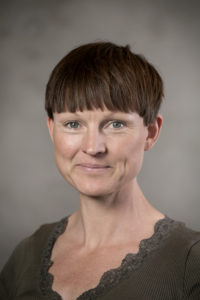
 Join Dr. Kongsted and I as we discuss her unique role as an author of the recent groundbreaking Lancet series of articles on Low Back Pain as well as many other topics. Alice Kongsted, DC, PhD graduated from the University of Southern Denmark in 1999 and completed her PhD at the Faculty of Health Sciences at the University of Southern Denmark in 2005. Up till 2009 she had clinical work as a chiropractor alongside her academic work, mainly in an outpatient hospital department. Currently she holds a position as senior researcher at the Nordic Institute of Chiropractic and Clinical Biomechanics (NIKKB) and a position as Associate Professor at the Department of Sports Science and Clinical Biomechanics at University of Southern Denmark. At NIKKB she has set up a network of chiropractic primary care research clinics that regularly participates in data collection for research purposes, the data being made available to researchers both inside and outside NIKKB. Her research interests concern spinal pain with a focus on primary care. This includes investigating the prognosis of spinal pain and why people have different outcomes.
Lately, she has been much occupied with a large project exploring ways to implement evidence-based care in practice. She has an interest in methodology and has taught PhD courses on prognostic research at University of Southern Denmark and at Curtin University in Perth, Australia. Alice Kongsted is an Associate Editor of BMC Musculoskeletal Disorders and she is a member of the editorial board for Chiropractic & Manual Therapies. She has been involved in The Danish Health Authority’s development of three national clinical guidelines for treatment of lumbar radiculopathy, cervical radiculopathy and of non-specific neck pain. She was part of the Lancet Low Back Pain Series Working Group that published three papers in March 2018 to call for worldwide recognition of the disability associated with back pain and the need for prioritizing this globally growing problem. This Lancet series will be a focus of our conversation today.
Visit Dr. Kongsted’s research profile at researchgate.net.
Here is a list of articles Dr. Kongsted mentions during the interview:
| 1. | Prevention and treatment of low back pain: evidence, challenges, and promising directions. |
| Foster NE, Anema JR, Cherkin D, Chou R, Cohen SP, Gross DP, Ferreira PH, Fritz JM, Koes BW, Peul W, Turner JA, Maher CG; Lancet Low Back Pain Series Working Group. | |
| Lancet. 2018 Mar 20. pii: S0140-6736(18)30489-6. doi: 10.1016/S0140-6736(18)30489-6. [Epub ahead of print] Review. | |
| PMID: 29573872 [PubMed – as supplied by publisher] | |
| Similar articles |
| 2. | Low back pain: a call for action. |
| Buchbinder R, van Tulder M, Öberg B, Costa LM, Woolf A, Schoene M, Croft P; Lancet Low Back Pain Series Working Group. | |
| Lancet. 2018 Mar 20. pii: S0140-6736(18)30488-4. doi: 10.1016/S0140-6736(18)30488-4. [Epub ahead of print] | |
| PMID: 29573871 [PubMed – as supplied by publisher] | |
| Similar articles |
| 3. | What low back pain is and why we need to pay attention. |
| Hartvigsen J, Hancock MJ, Kongsted A, Louw Q, Ferreira ML, Genevay S, Hoy D, Karppinen J, Pransky G, Sieper J, Smeets RJ, Underwood M; Lancet Low Back Pain Series Working Group. | |
| Lancet. 2018 Mar 20. pii: S0140-6736(18)30480-X. doi: 10.1016/S0140-6736(18)30480-X. [Epub ahead of print] Review. | |
| PMID: 29573870 [PubMed – as supplied by publisher] | |
| Similar articles |
| 4. | Identifying subgroups of patients using latent class analysis: should we use a single-stage or a two-stage approach? A methodological study using a cohort of patients with low back pain. |
| Nielsen AM, Kent P, Hestbaek L, Vach W, Kongsted A. | |
| BMC Musculoskelet Disord. 2017 Feb 1;18(1):57. doi: 10.1186/s12891-017-1411-x. | |
| PMID: 28143458 [PubMed – indexed for MEDLINE] Free PMC Article | |
| Similar articles |
| 5. | What have we learned from ten years of trajectory research in low back pain? |
| Kongsted A, Kent P, Axen I, Downie AS, Dunn KM. | |
| BMC Musculoskelet Disord. 2016 May 21;17:220. doi: 10.1186/s12891-016-1071-2. | |
| PMID: 27209166 [PubMed – indexed for MEDLINE] Free PMC Article | |
| Similar articles |
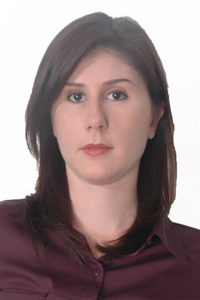 Dr. Carolina Kolberg and I discuss her research dealing with the effect of chiropractic care on oxidative stress blood markers. Dr. Kolberg has a degree in chiropractic from the Anhembi Morumbi University in São Paulo, Brazil (2004), and she completed her Masters (2009) and PhD (2013) in Biological Sciences: Physiology at the Federal University of Rio Grande do Sul (UFRGS). Her research interests include the neurophysiology of pain and physiological effects of chiropractic treatment. Dr. Kolberg’s thesis on oxidative stress blood markers in patients with chronic back or neck pain treated with high-velocity and low-amplitude manipulation support the hypothesis that HVLA spinal manipulation leads to an antioxidant effect which, in turn, could be related to the analgesic response. Being the first chiropractor graduated in Brazil with a PhD, her goal is to promote the interest of Brazilians’ young chiropractors in research.
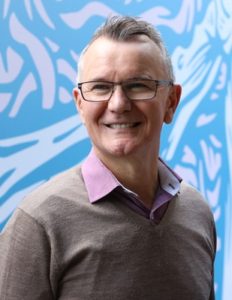 Dr. Craig Moore discusses the role of chiropractors in the management of headaches. Some areas of discussion we touch upon include the societal impact and costs associated with headaches; prevalence of headaches in the community; prevalence of headache in chiropractic clinical settings; why do people turn to chiropractors; current level of evidence for chiropractic treatment of different headache types; what do the headache guidelines recommend for each headache; what should a chiropractor consider when examining a headache patient (history and examination).
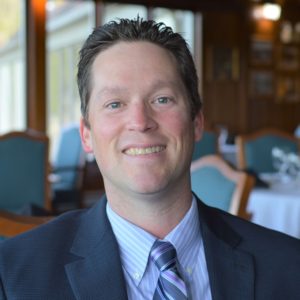 Listen as Dr. Gregory Cramer interviews Dr. Dean Smith regarding his research involving chiropractic as well as exercise on response time, letters to editor and case studies. Dr. Dean Smith is a senior clinical faculty member in the Department of Kinesiology and Health at Miami University. He also maintains a private practice of chiropractic in Eaton, Ohio at Essence of Wellness Chiropractic Center. He is founder and host of Chiropractic Science – this podcast. Chiropractic Science is dedicated to publicizing chiropractic research through podcast interviews with leading chiropractic scientists.
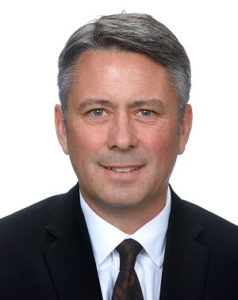 Listen as Dr. Pierre Côté and I discuss his involvement in hugely impactful research on stroke, lumbar disc herniations and neck pain. He provides chiropractors with key information that helps de-mystify these topics. Pierre Côté DC, PhD is an epidemiologist. In 2013, he was awarded the prestigious Canada Research Chair in Disability Prevention and Rehabilitation from the Canadian Government. He is currently an Associate Professor in the Faculty of Health Sciences at the University of Ontario Institute of Technology, director of the UOIT-CMCC Centre for the Study of Disability Prevention and Rehabilitation and an Associate Professor in the Dalla Lana School of Public Health at the University of Toronto. Dr. Côté graduated from the Canadian Memorial Chiropractic College in 1989. In 1996, he obtained a Master’s Degree in Surgery from the University of Saskatchewan. He completed his PhD in epidemiology at the University of Toronto in 2002. In 2003, he received a New Investigator Award from the Canadian Institutes of Health Research.
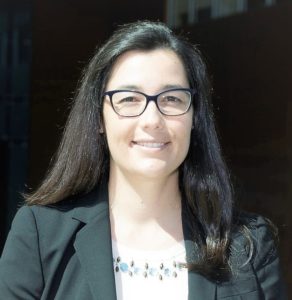 Is sitting killing you? What kind of posture should you have seated or standing? How much time should you sit versus stand at work? How much spine flexion is too much? Can chiropractic manipulation help with seated postures? These are some of the many questions that are addressed in this interview. Dr. Diana De Carvalho is an Assistant Professor at Memorial University of Newfoundland in the Discipline of Medicine, Faculty of Medicine. She holds the Canadian Chiropractic Research Foundation Professorship in Spine Biomechanics and is cross-appointed to the School of Human Kinetics and Recreation.
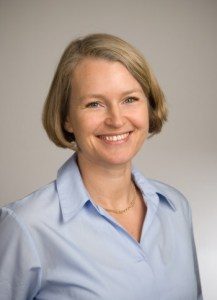 In this interview, Dr. Axén and I discuss the trajectories of low back pain, the characteristics of chiropractic patients with low back pain and practice based research. Iben Axén is a chiropractor in private practice in Stockholm, Sweden, who started to engage in practice-based research in the 1990’s. In 2011, she earned her PhD at Karolinska Institutet (KI) in Stockholm. She previously held a post-doc position shared between KI and the University of Southern Denmark. Currently she is an Associate professor in Musculoskeletal Health at the Karolinska Institutet. Her research centers on chiropractic care for low back pain (LBP). She has published work regarding predictors of treatment outcome, the clinical course and episodes of LBP and of subgrouping patients. Further, she is involved in the Nordic Maintenance Care Program, including the use of, indications for and outcomes of prevention. Iben Axen’s work is mainly based ondata from multicentre longitudinal studies. She is a firm believer in engaging chiropractic clinicians in data collection as part of the implementation process. In several studies, she has used a novel way of frequently measuring outcome using mobile phones and text messages, which allow for detailed studies of conditions that vary over time, for instance LBP.
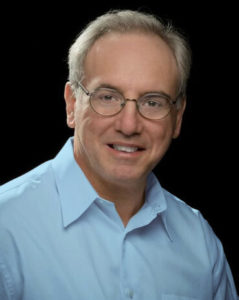 In this interview, Dr. Ammendolia and I discuss his work regarding chiropractic care and lumbar spinal stenosis including his recent randomized controlled trial in this area of study. Carlo Ammendolia, DC, PhD is the Director of the Spine Clinic and the Spinal Stenosis Program at the Rebecca MacDonald Centre for Arthritis and Autoimmune Diseases at Mount Sinai Hospital. He received his MSc degree in Clinical Epidemiology and Health Care Research his PhD in Clinical Evaluative Sciences from the University of Toronto. Dr. Ammendolia is an Assistant Professor in the Institute of Health Policy, Management and Evaluation, the Department of Surgery and the Institute of Medical Sciences at the University of Toronto. In 2012, Dr. Ammendolia was recipient of the Professorship in Spine Award from the Department of Surgery in the Faculty of Medicine. In 2015 he was award the Chiropractor of the Year Award from the Ontario Chiropractic Association and in 2016 the Researcher of the Year Award from the Canadian Chiropractic Association. Dr. Ammendolia has been in clinical practice for over 30 years and now combines clinical practice and research in the area of non-operative treatment of mechanical, degenerative and inflammatory spinal disorders with a special interest in degenerative lumbar spinal stenosis.
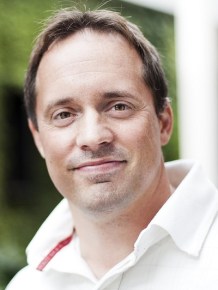
 I am really excited that in this interview, we’ll discuss topics such as: spine care as a framework for the chiropractic identity (as well as primary spine care), psychologic factors in spinal pain, lumbar spinal stenosis and, the Clinical Reasoning in Spine Pain (CRISP) protocols.