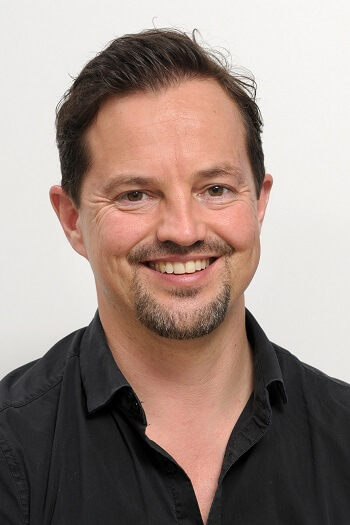
In this upcoming episode, Dr. Meier will discuss how people move differently in the presence of (or in anticipation of) pain. Changes in motor control may play an important role in musculoskeletal pain. His lab uses a cross-disciplinary approach that combines neuroscience and movement biomechanics to provide new insights into the role of potential interactions between movement behavior, psychological factors and supraspinal mechanisms in the development and maintenance of persistent low back pain. We’ll touch also on fear avoidance and pain related movement avoidance. Dr. Michael L. Meier is a senior pain researcher and group leader at the Department of Chiropractic Medicine at the University of Zurich. He received his master’s degree in neuropsychology and his doctorate in cognitive neuroscience from the University of Zurich, focusing on the processing of pain and nociception in the brain. In 2019, he received a grant from the Swiss National Science Foundation (SNF) to study the role of movement behavior and cortical processes in the development and persistence of low back pain. A hallmark of his work is linking research from different disciplines such as biomechanics, neuroscience, and psychology, shedding light on novel interacting pathomechanisms underlying persistent low back pain whose pathoanatomical cause is often unclear.
https://chiropracticscience.com/wp-content/uploads/2017/01/chiroscience-logo-website-title-300x167.jpg00Dean Smith, DC, PhDhttps://chiropracticscience.com/wp-content/uploads/2017/01/chiroscience-logo-website-title-300x167.jpgDean Smith, DC, PhD2021-09-08 14:37:162021-09-08 14:37:18Upcoming Interview with Dr. Michael Meier
Dr. Cesar Hincapie and I discuss his research involving chiropractic, lumbar disc herniations and nerve root injections. He describes the ongoing SALuBRITY trial which is the first-ever chiropractic randomized clinical trial funded by the Swiss National Science Foundation and is also partially funded by the European Centre for Chiropractic Research Excellence.
Dr. Cesar Hincapié completed his clinical training as a Doctor of Chiropractic (DC, 2003) at the Canadian Memorial Chiropractic College, in Toronto, Canada. While maintaining a clinical practice, he earned a MHSc (2008) and a PhD (2015) in epidemiology at the University of Toronto. During his PhD, he was awarded a Canadian Institutes of Health Research Fellowship in knowledge translation. After several years of research, clinical, and teaching activities, Dr. Hincapié completed postdoctoral training in clinical trials and injury epidemiology at the Li Ka Shing Knowledge Institute of St. Michael’s Hospital (University of Toronto affiliated academic hospital). In 2019, he was recruited to the University of Zurich as an International Chiropractic Research Fellow and served as head of clinical research within the Department of Chiropractic Medicine at Balgrist University Hospital and University of Zurich. As of August 2022, Cesar joined the Epidemiology, Biostatistics and Prevention Institute at the University of Zurich as Senior Scientist and Head of the Musculoskeletal Epidemiology Research Group.
The Musculoskeletal Epidemiology Research Group is an interdisciplinary research team focused on producing high quality and relevant research related to musculoskeletal and spine health and care. Their work applies a clinical epidemiological perspective to the area of musculoskeletal health and care. Dr. Hincapié is the principal investigator of the SALuBRITY randomised clinical trial, which is assessing the comparative effectiveness of spinal manual therapy and corticosteroid nerve root injection for the management of patients with sciatica.
Hincapié CA, Kroismayr D, Hofstetter L, Kurmann A, Cancelliere C, Raja Rampersaud Y, Boyle E, Tomlinson GA, Jadad AR, Hartvigsen J, Côté P, Cassidy JD.
Eur Spine J. 2025 Jan;34(1):263-294. doi: 10.1007/s00586-024-08528-8. Epub 2024 Oct 25.
In this episode, Dr. Meier discusses how people move differently in the presence of (or in anticipation of) pain. Changes in motor control may play an important role in musculoskeletal pain. His lab uses a cross-disciplinary approach that combines neuroscience and movement biomechanics to provide new insights into the role of potential interactions between movement behavior, psychological factors and supraspinal mechanisms in the development and maintenance of persistent low back pain. We’ll touch also on fear avoidance and pain related movement avoidance. Dr. Michael L. Meier is a senior pain researcher and group leader at the Department of Chiropractic Medicine at the University of Zurich. He received his master’s degree in neuropsychology and his doctorate in cognitive neuroscience from the University of Zurich, focusing on the processing of pain and nociception in the brain. In 2019, he received a grant from the Swiss National Science Foundation (SNF) to study the role of movement behavior and cortical processes in the development and persistence of low back pain. A hallmark of his work is linking research from different disciplines such as biomechanics, neuroscience, and psychology, shedding light on novel interacting pathomechanisms underlying persistent low back pain whose pathoanatomical cause is often unclear.
https://chiropracticscience.com/wp-content/uploads/2021/09/MMeier2021.jpg525350Dean Smith, DC, PhDhttps://chiropracticscience.com/wp-content/uploads/2017/01/chiroscience-logo-website-title-300x167.jpgDean Smith, DC, PhD2021-09-23 15:46:162021-09-23 15:46:19057- Low Back Pain, The Brain and Movement with Dr. Michael Meier