Episode

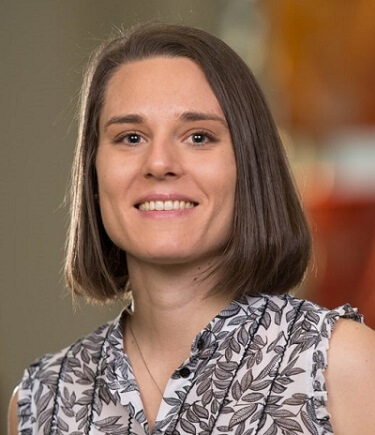
Drs. Jim Whedon and Brian Anderson join me for a discussion about their R15 award involving 3 Medicare neck pain cohort studies.

Jim Whedon DC, MS is a Senior Health Services Researcher at Southern California University of Health Sciences and Adjunct Professor at The Dartmouth Institute for Health Policy and Clinical Practice. He has authored more than 65 peer reviewed publications. Dr. Whedon’s research focuses on evaluation of the quality and accessibility of non-pharmacological therapies for spine pain. He is a recipient of the Jerome F. McAndrews DC Memorial Research Fund Award from NCMIC Foundation and the Scott Haldeman Award for Outstanding Research from the World Federation of Chiropractic.

Dr. Anderson is a health services researcher and 2004 graduate of National University of Health Sciences. He has 20 years of experience across clinical practice, teaching, and research. His efforts have been focused on research full-time since completing his PhD in 2019. He served as a faculty member at the Palmer Center for Chiropractic Research for five years before transitioning to the University of Pittsburgh. His research examines healthcare utilization and outcomes in spinal pain disorders using administrative claims, electronic health records, and survey data. Additional research interests include research-capacity building in chiropractic and other CIH institutions as well as evidence synthesis. At the University of Pittsburgh, he engages in interdisciplinary research initiatives, advises faculty and trainees, and contributes to the integration of research methodologies into the academic curriculum.

Here is the video for this episode:


Here are Dr. Whedon’s researchgate profile as well as Dr. Anderson’s researchgate profile.

The articles that are discussed in this episode are found below:


1.
Observational Study of the Safety of Chiropractic vs Medical Care Among Older Adults With Neck Pain.
Whedon JM, Anderson B, Mackenzie TA, Grout L, Moonaz S, Lurie JD, Haldeman S.
J Manipulative Physiol Ther. 2025 Sep 9:S0161-4754(25)00002-8. doi: 10.1016/j.jmpt.2025.07.002. Online ahead of print.
PMID: 40923947
2.
Comparative Cost Analysis of Neck Pain Treatments for Medicare Beneficiaries.
Anderson BR, MacKenzie TA, Grout LM, Whedon JM.
Arch Phys Med Rehabil. 2025 May;106(5):801-804. doi: 10.1016/j.apmr.2025.01.467. Epub 2025 Feb 14.
PMID: 39955668
3.
Patterns of initial treatment and subsequent care escalation among medicare beneficiaries with neck pain: a retrospective cohort study.
Anderson BR, MacKenzie TA, Lurie JD, Grout L, Whedon JM.
Eur Spine J. 2025 Feb;34(2):724-730. doi: 10.1007/s00586-024-08581-3. Epub 2024 Dec 26.
PMID: 39722095


Dr. Lindsay Gorrell and I discuss her research regarding spinal manipulation, the vertebral artery and reporting of adverse events. Lindsay Gorrell completed her clinical training in Chiropractic and a Master of Research (The effect of manual and instrument applied cervical spine manipulation on mechanical neck pain) at Macquarie University, Australia. She then completed a PhD (Musculoskeletal Biomechanical and Electromyographical Responses Associated with Spinal Manipulation) under the supervision of Drs Walter Herzog and Jay Triano at The University of Calgary, Canada. She is now working as an International Research Fellow at the Balgrist University Hospital, University of Zurich, Switzerland. Lindsay is also studying a Master of Science in Medical Education at The University of Oxford, England.

Lindsay’s research interests are centered on investigating: i) the delivery of spinal manipulation; ii) the physiological responses and clinical outcomes occurring in response to spinal manipulation; and iii) the safety of the manual therapy. This requires different experimental approaches depending on the research question of interest. Most recently, she has published on the relationship between the amount of strain experienced by the vertebral artery, the 3D movements of the head and neck and the forces applied by clinicians during cervical spine manipulation and physiological responses to cervical and upper thoracic spinal manipulation. Lindsay has maintained part-time clinical practice since graduation.  

View Dr. Gorrell’s researchgate page here.

Below are the research studies that we discuss in this episode.

1.The reporting of adverse events following spinal manipulation in randomized clinical trials-a systematic review.Gorrell LM, Engel RM, Brown B, Lystad RP.Spine J. 2016 Sep;16(9):1143-51. doi: 10.1016/j.spinee.2016.05.018. Epub 2016 May 27.PMID: 27241208 Review.
2.Differences in force-time parameters and electromyographic characteristics of two high-velocity, low-amplitude spinal manipulations following one another in quick succession.Gorrell LM, Conway PJ, Herzog W.Chiropr Man Therap. 2020 Dec 8;28(1):67. doi: 10.1186/s12998-020-00355-0.PMID: 33287851 Free PMC article.
3.Kinematics of the head and associated vertebral artery length changes during high-velocity, low-amplitude cervical spine manipulation.Gorrell LM, Kuntze G, Ronsky JL, Carter R, Symons B, Triano JJ, Herzog W.Chiropr Man Therap. 2022 Jun 1;30(1):28. doi: 10.1186/s12998-022-00438-0.PMID: 35650649 Free PMC article.
4.Vertebral arteries do not experience tensile force during manual cervical spine manipulation applied to human cadavers.Gorrell LM, Sawatsky A, Edwards WB, Herzog W.J Man Manip Ther. 2022 Nov 15:1-9. doi: 10.1080/10669817.2022.2148048. Online ahead of print.PMID: 36382347